
7/15/25
Can AI Be as Good as a Human Therapist? This Study Says It Can.
What it takes to prove that AI can work in mental health support – not just as a flashy tool, but as a meaningful intervention.

Back to Resources


Summary
ieso's peer-reviewed study in the Journal of Medical Internet Research (JMIR) tested an AI-driven digital program for generalized anxiety against traditional CBT. Across 300 participants, the program produced an average GAD-7 reduction of 7.4 points, comparable to face-to-face and typed CBT, with effects sustained one month after completion. The program used up to 8x less clinician time than traditional therapy. 94% of patients valued having a clinician available, though only 15% used the support. Clare Palmer, PhD, Director of Evidence Generation at ieso, walks through the why, how, results, and implications in a four-part video series.
At ieso, we didn’t just build a digital program and hope for the best. We put it to the test through a peer-reviewed clinical study published in the Journal of Medical Internet Research (JMIR).
The goal? To show that when AI is paired with the right human support, it can deliver results comparable to traditional therapy…using a fraction of the clinician time.
In this four-part video series, Clare Palmer, PhD, Director of Evidence Generation at ieso, walks through the study: why we did it, how we did it, what we learned, and why it matters. If you’re curious about the future of evidence-based, AI-powered mental healthcare, this is a milestone worth knowing about.
Why we did this study
We wanted to show that the right combination of technology and human support can work just as well as traditional therapy – and back it up with peer reviewed science.
Everything we do is driven by clinical expertise and technological innovation. And we've been at this a long time. For over 14 years, we've delivered therapist-led, typed cognitive behavioral therapy (CBT) remotely to NHS patients across the UK. And because each therapy session is typed, we've collected over 750,000 hours of transcripts.
By using AI to analyze these transcripts, we've identified the "active ingredients" of what really makes therapy work: the words and moments that lead to real breakthroughs. We've used that expertise to create a program where AI, paired with human support, systematically teaches people cognitive and behavioral skills in an engaging and interactive way.
Our latest peer reviewed clinical study shows the results are just as good as human delivered therapy – and it's really exciting!
The reality is, clinically effective and engaging AI capabilities are here, and it's about to radically change mental health care. This paper is one step towards this new future.
How we did it
We built a structured, six-part digital program rooted in CBT principles, particularly an approach called acceptance and commitment therapy.
The program involved interactions driven by an AI conversational agent using a first-generation, rule-based system. Basically, complex logic that understands what a user has typed, and then guides them through a series of clinician-written responses. It's this interaction that really drives engagement. (Actually, only around 5% of the thousands of mental health apps out there use an AI conversational agent in this way.)
We also added a layer of human support, so participants knew someone was there if they needed them.
In this study, we enrolled 300 people with generalized anxiety who could use the program for up to nine weeks. We integrated the program into our typed therapy service to mirror the real patient experience. Then, we compared their outcomes to real world patients in our database who receive traditional CBT, either face-to-face or typed, as well as those waiting for therapy.
What we learned
Results were impressive. On average, participants used the program for around six hours, which is encouraging considering engagement is notoriously low for digital mental health programs.
We measured improvements in anxiety using something called the GAD-7 scale, a standard questionnaire that clinicians use. For context, a 4-point change on this scale is considered clinically meaningful. We saw an average change of 7.4. Even those with severe anxiety saw a big reduction in their symptoms.
The average reduction in anxiety was comparable to patients receiving traditional therapy – yet, the program used up to 8x less clinician time. That's huge.
Also, just knowing that someone was there made a big difference. Ninety-four percent of patients valued having a clinician available if they needed one, but only 15% used that support.
These improvements lasted a month after completing the program – so the effects were durable, not temporary.
Why it matters
What's exciting about this study is that it shows we've turned a corner in mental healthcare. We're entering a new era where AI, paired with the right human support and in the right context, can deliver similar outcomes to traditional therapy.
Our first-generation program used rule-based AI, but it laid the groundwork for what's next: a fully generative system that adapts in real time, is clinically safe, and that's built for improving mental health.
Right now, people are using generative AI platforms like ChatGPT for mental health support. But they're not safe. They're not clinically proven.
We're designing systems that expand access to high-quality care – that help people feel better, faster – using technology that's clinically curated, safe, and that they can trust.
We started with a hypothesis: What if we could pinpoint what actually works in therapy and use technology to deliver it systematically to everyone who needs it?
Now, in this new era of AI, that vision is becoming reality.
We're not simply imagining the future, we're literally building it. Right now.


ABOUT THE AUTHOR

Clare Palmer, PhD

Latest Articles
9/9/26
The Future of AI in Mental Health: Safety, Therapy, and Human Judgment
On the Beyond the Couch podcast, ieso's Head of Clinical Strategy, Alyssa Dietz, PhD, gets into where AI earns its place in mental health support and where human clinical judgment stays non-negotiable.
9/2/26
Listen Longer
Two years into his role, ieso CEO Kent Tangen pauses to reflect on lessons learned about leadership, ambition, humility, and building mental health support around what clinicians and patients need.
7/22/26
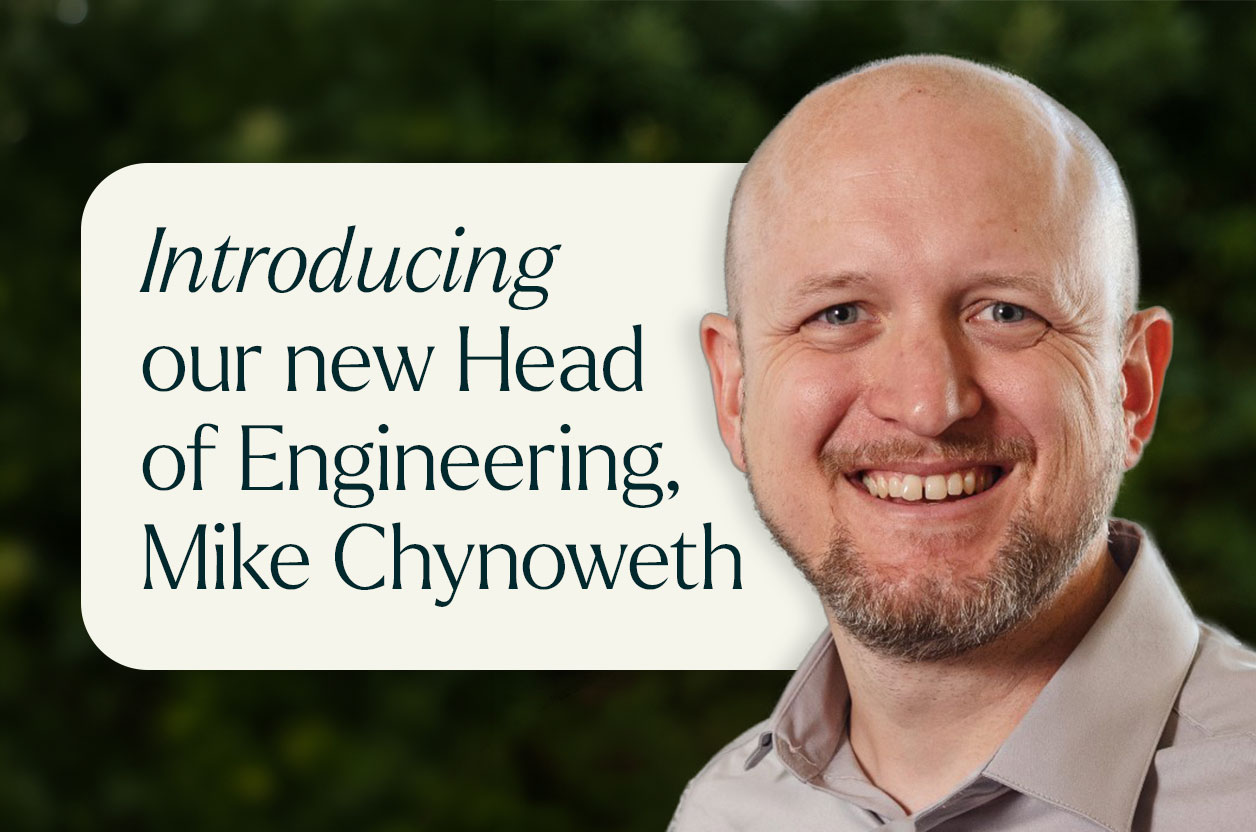
ieso Welcomes Mike Chynoweth as Head of Engineering
An engineering executive who translates strategy into execution and builds teams that deliver quality at speed, Mike Chynoweth brings over 20 years of experience across healthcare, security, and regulated SaaS to ieso as Head of Engineering.

7/8/26
Joy Isn't a Reward for Healing
Dr. Talia Cohen and Alyssa Dietz, PhD, on chronic conditions, identity, lived experience, and the mental health piece most digital health companies are still missing.