
3/6/26
What a Room Full of Health Tech Builders Is Talking About Right Now
Insights from Cornell Tech and Weill Cornell Medicine's Health Tech Summit 2026.

Back to Resources



Summary
Insights from Cornell Tech and Weill Cornell Medicine's Health Tech Summit 2026. Four themes stood out. Healthcare's problem is implementation, not innovation, with AI traction so far limited to ambient scribes and revenue cycle. Mental health cannot be a footnote in chronic care, where nine in ten older adults and eight in ten midlife adults live with at least one chronic condition. Interoperability is finally moving from slide deck to reality, with U.S. healthcare saving an estimated $258 billion in administrative costs in 2024. And the moonshot mandate to invent, investigate, and inspire still matters for solving the system's biggest problems.
New York has a way of sharpening your thinking and putting you on your A game. Two days at the Health Tech Summit, organized by Cornell Tech and Weill Cornell Medicine, and that was the vibe. I left with pages of notes, a full contact list, and a few ideas I can't stop turning over.
Here's what stuck with me.
Healthcare doesn't have a technological innovation problem. It has an implementation problem.
Dave Chokshi, former NYC Health Commissioner, said it plainly: technologies should be subservient to relationships in healthcare. Of course, in healthcare, implementing AI technology is easier said than done! The places where AI has gained the most traction thus far, ambient scribes and revenue cycle management, are real wins. But they haven't touched the deeper, more systemic problem: misaligned incentives. Providers are rewarded for billing more. Payers are rewarded for denying more. Nobody is rewarded for the outcome that actually matters. Until AI is deployed against that problem specifically, we're putting band-aids on a system that needs surgery. At ieso, this is something we think about every day.
Mental health can't be an afterthought.
Chris Klomp, Director of Medicare at CMS, was direct: you can't build the future of healthcare and treat mental health as a footnote. The numbers back this up. Nine in ten older adults and eight in ten midlife adults in the U.S. are living with at least one chronic condition, and depression and anxiety sitting alongside a physical diagnosis doesn't just add complexity, it compounds it. Behavioral health is woven into almost every chronic condition. You can't separate the two.
Interoperability is finally getting serious.
For years, this word showed up on conference agendas and disappeared by lunch. Not this time! The conversation has shifted from "we should do this" to "we are most definitely doing this." And the savings speak for themself. U.S. healthcare avoided an estimated $258 billion in administrative costs in 2024 through improved data exchange, and that's just the beginning. The days of five separate logins for one person are numbered. That's a win for everyone in this industry -- most importantly, for patients.
The moonshots are worth betting on. But only if we're aiming at the right things.
The closing session was a good reminder that incrementalism only gets you so far. The goal with AI, as Pat Pataranutaporn of the MIT Media Lab framed it, is to achieve superintelligence. But the fear is we're drifting toward "super-stupidity" because we're not focused on thinking big enough with AI to solve the right problems.
Invent, investigate, inspire. That's the mandate, moonshot or no. The researchers and innovators in that room weren't optimizing around the edges. They were asking what healthcare could look like if we got super ambitious. That kind of thinking can feel impractical in an industry as complex and regulated as this one, but, honestly, we need more of it. The problems are so big that we can't afford to think small. I left that conference room more convinced of that than when I walked in.
So, there you go. Two days. Four insights. And a hundred conversations I'm still processing! That's the Health Tech Summit 2026. See you there next year!


ABOUT THE AUTHOR

Molly Fuller
Head of Strategic Partnerships

Latest Articles

9/9/26
The Future of AI in Mental Health: Safety, Therapy, and Human Judgment
On the Beyond the Couch podcast, ieso's Head of Clinical Strategy, Alyssa Dietz, PhD, gets into where AI earns its place in mental health support and where human clinical judgment stays non-negotiable.

9/2/26
Listen Longer
Two years into his role, ieso CEO Kent Tangen pauses to reflect on lessons learned about leadership, ambition, humility, and building mental health support around what clinicians and patients need.
7/22/26
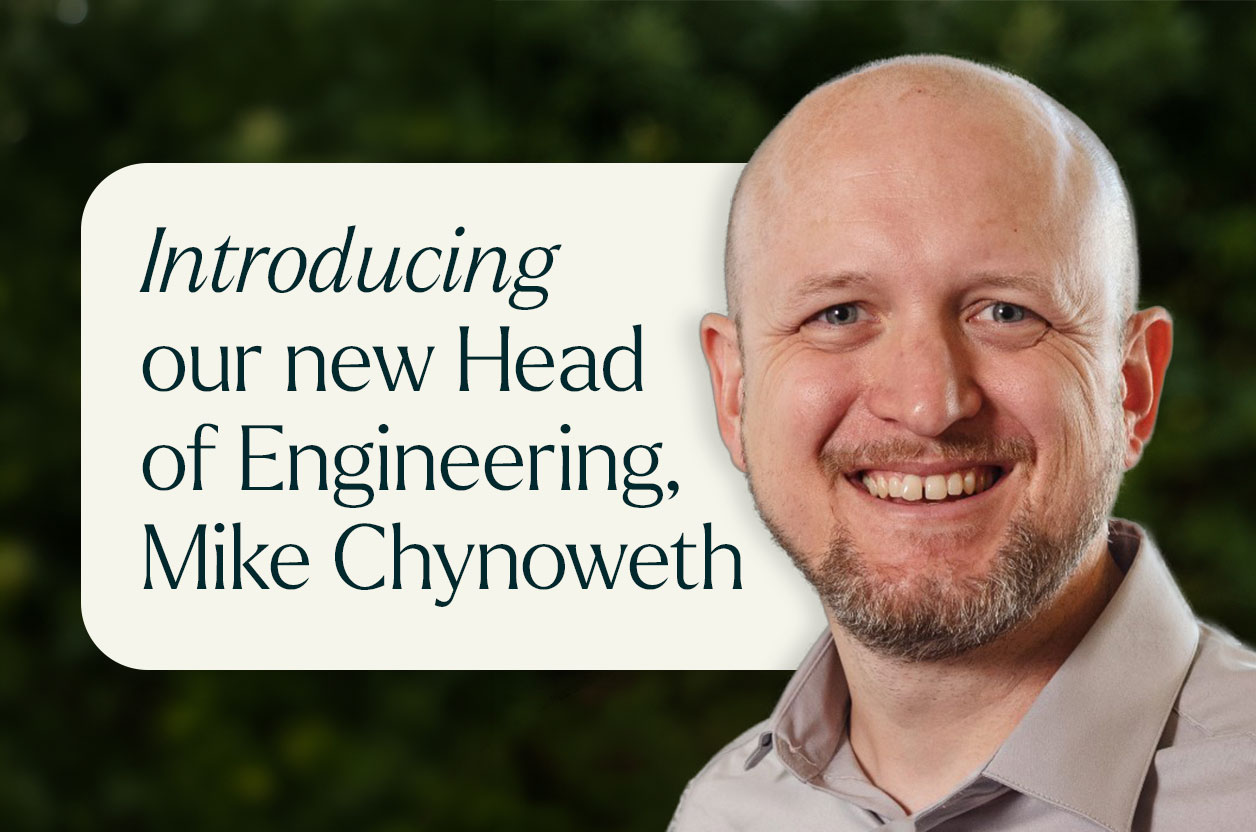
ieso Welcomes Mike Chynoweth as Head of Engineering
An engineering executive who translates strategy into execution and builds teams that deliver quality at speed, Mike Chynoweth brings over 20 years of experience across healthcare, security, and regulated SaaS to ieso as Head of Engineering.

7/8/26
Joy Isn't a Reward for Healing
Dr. Talia Cohen and Alyssa Dietz, PhD, on chronic conditions, identity, lived experience, and the mental health piece most digital health companies are still missing.