
11/20/26
Access Is Only the First Act: What AI Must Do Next in Mental Healthcare
On the Becker's Healthcare Behavioral Health podcast, ieso's Chief Science and Strategy Officer, Andy Blackwell explores how AI can help us learn from every patient's journey to deliver more personalized, effective mental health support for the next.

Back to Resources


What if mental healthcare could learn from every patient journey to make the next one better? In a conversation with Becker's Healthcare, ieso's Chief Science and Strategy Officer Andy Blackwell explains why expanding access is only the beginning, and how AI could help take the trial and error out of treatment by revealing what works, for whom, and when.
Questions and responses in this Q&A have been edited and condensed for length and clarity. Listen to the full conversation on the Becker's Healthcare Behavioral Health Podcast.
What will win in AI and behavioral health over the next five years? And what are we overestimating?
Andy Blackwell: I think the next five years will turn out to be the most important and exciting period in the history of mental health science and mental healthcare.
For the first time, every encounter in behavioral health can be recorded. So we'll know what was done and what happened next. And for the first time, in 2026, we have the compute to integrate that information and feed it back into the next encounter.
The organizations that turn their data into a learning system where each person's care makes the next person's care a little better will pull away from the pack.
I think what we're overestimating today is the role of scribes and chatbots. They're useful, and in particular, they're starting to give clinicians real time back.
But if all that we do is automate the care that we already deliver, we'll have a faster version of a system where too many people wait, drop out, or fail to recover.
We talk constantly about AI solving the mental health access problem. But are we thinking too small? What comes after access?
Andy Blackwell: I think we are thinking too small.
Access matters enormously, and that is not a solved problem yet. AI can add capacity, cut waits, and support people between sessions of care.
But access is just the first act. The second act is getting things right the first time.
At ieso, we conducted a study in 27,000 patients, published in Nature Mental Health, which found that the big cost drivers in mental illness and behavioral health are delay and care that doesn't reliably work.
To me, the next act is about getting things right earlier. That means prevention. It means reaching people before symptoms escalate and reaching people whose mental health is tangled up in complex chronic physical health conditions.
And it means precision: knowing what's most likely to help this person, in this moment, at this point in their journey of care.
The first act was about access. I think we now need to shift our attention to outcomes.
Mental healthcare still involves a lot of trial and error. How can AI help us learn what works and make better treatment decisions?
Andy Blackwell: At ieso, we've spent the last decade working with hundreds of thousands of patients and thousands of clinicians to study how the decisions and actions people take affect clinical outcomes.
When we previously operated one of the largest mental telecare services in Europe, we often heard people say things like, "I tried this, I tried that, I eventually found someone who did something and it clicked."
That guesswork causes enormous suffering and cost.
Clinical trials on their own don't serve as an answer to that problem because no trial can test every combination of person, problem, and intervention. So we need new methods.
We now have the computational resources and methods, such as trial emulation, to work out what works for whom and make that knowledge available to patients wherever they are.
In practice, this shows up in really ordinary places. Like in care planning, for example, where a clinician gets a suggested plan grounded in the literature and in what's worked for similar cases, combining evidence-based practice and practice-based evidence.
Also, in dropout prediction, where we can see who's at risk of disengaging and step in to enable them to stay in care long enough to benefit.
Each of these moments is an opportunity to help people alter their journey, where trajectories can bend. If we get enough of these moments right, we can change the odds that someone recovers or that a short-term problem becomes a long, chronic, costly problem.
Everyone in healthcare is promising hyper-personalization at scale. What separates personalization that improves outcomes from an AI chatbot that's exceptionally good at sounding empathetic?
Andy Blackwell: Measurement.
Any good model can sound warm. The question is whether the person actually gets better and whether we can demonstrate that.
The goal is to find the next best intervention: the right technique, the right timing, the right intensity that's most likely to help this person move towards their goals.
This has to be learned from real outcomes and real data.
Hundreds of millions of people are already using AI for emotional support and personal development. We're studying whether that's a positive or negative thing.
But when something is stopping someone from working, being with their family, or living a life with purpose, they need specific evidence-based interventions with measured recovery characteristics.
I think we need to be really careful as we create next-generation AI systems that we don't just learn to emulate today's care.
Today's care is characterized by long wait lists and variable recovery rates. Even for depression, recovery rates are around 50% in many adult psychotherapy populations.
We have to learn to make care more accessible, but also make it transformatively more effective.
AI holds enormous promise, but the stakes are high. Where should we draw the boundaries between AI and human clinical judgment?
Andy Blackwell: Our perspective is that the line moves over time, and we should move it deliberately and with intention.
We should unlock capabilities progressively as the evidence builds, with close monitoring once they're deployed. That needs to be a shared responsibility between responsible developers and organizations serving people's needs.
Of course, AI can't carry a duty of care. People and organizations do that.
The model I like is called triadic care, where the patient, the clinician, and AI work together, with AI as a co-clinician that lets one clinician help more people.
As the technology changes so fast, one thing we're starting to learn is that we can agree up front how changes are handled.
Small changes go ahead with full transparency and fast rollback. Anything that could affect clinical safety goes through full governance.
We can take advantage of the pace of innovation whilst maintaining a responsible posture on safety.
Fast-forward five years. If we get this right, how will mental healthcare look different? And what should healthcare leaders do now?
Andy Blackwell: In five years, I hope mental healthcare works as a learning system.
People get the right support earlier, recovery is measured as a matter of course, and every episode of care makes the next one better.
For leaders, I'd say three things.
First, get involved now as real partners with responsible developers, because these systems and your data will power changes in the quality of care people receive and the economics of healthcare delivery.
Second, redesign the workflow rather than bolting AI into it. We don't just want to tag things on to a current system of care, which is inadequate.
And the final thing I'd say is that, in this new era, we can finally break limits that we've come to accept as somehow immovable or immutable. Things like wait lists, 50% recovery rates, and so on.
For the first time in history, these are now tractable challenges that we can address.
Follow Andy Blackwell on LinkedIn.


ABOUT THE AUTHOR


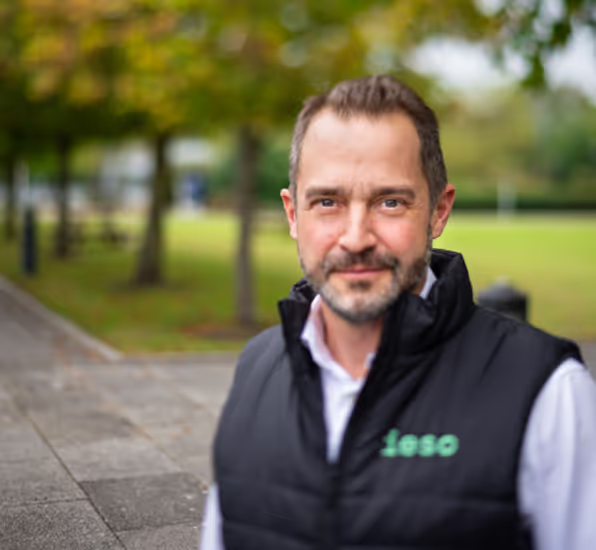
Dr. Andy Blackwell
Chief Science & Strategy Officer
Latest Articles

10/28/26
ieso Welcomes Joe Raiker, PhD as Director of Clinical Strategy
Meet the clinical psychologist (and Mean Girls aficionado) bringing expertise across academia, pharma, and digital health to help build what's next at ieso.
10/6/26
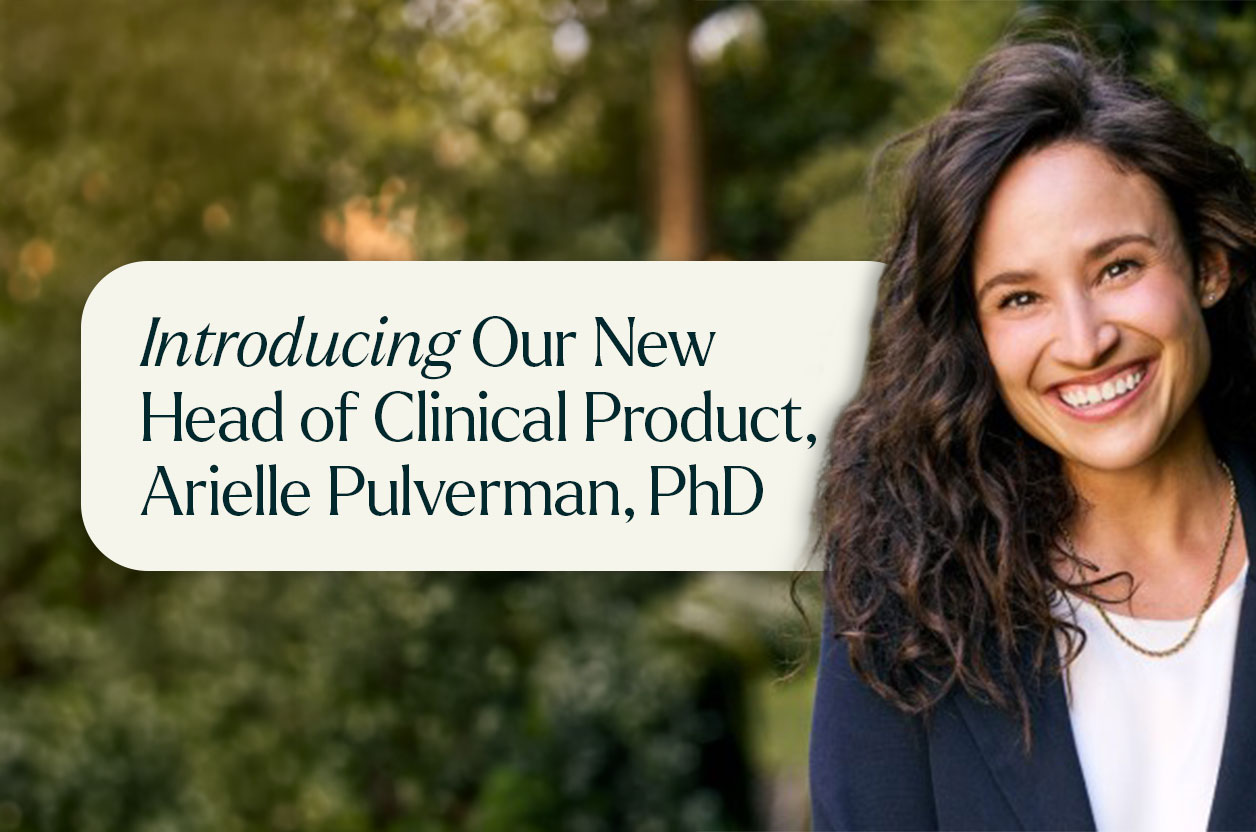
ieso Welcomes Arielle Pulverman, PhD as Head of Clinical Product
Meet the health psychologist, founder, and product leader shaping how ieso builds clinically grounded AI for mental health.
9/9/26
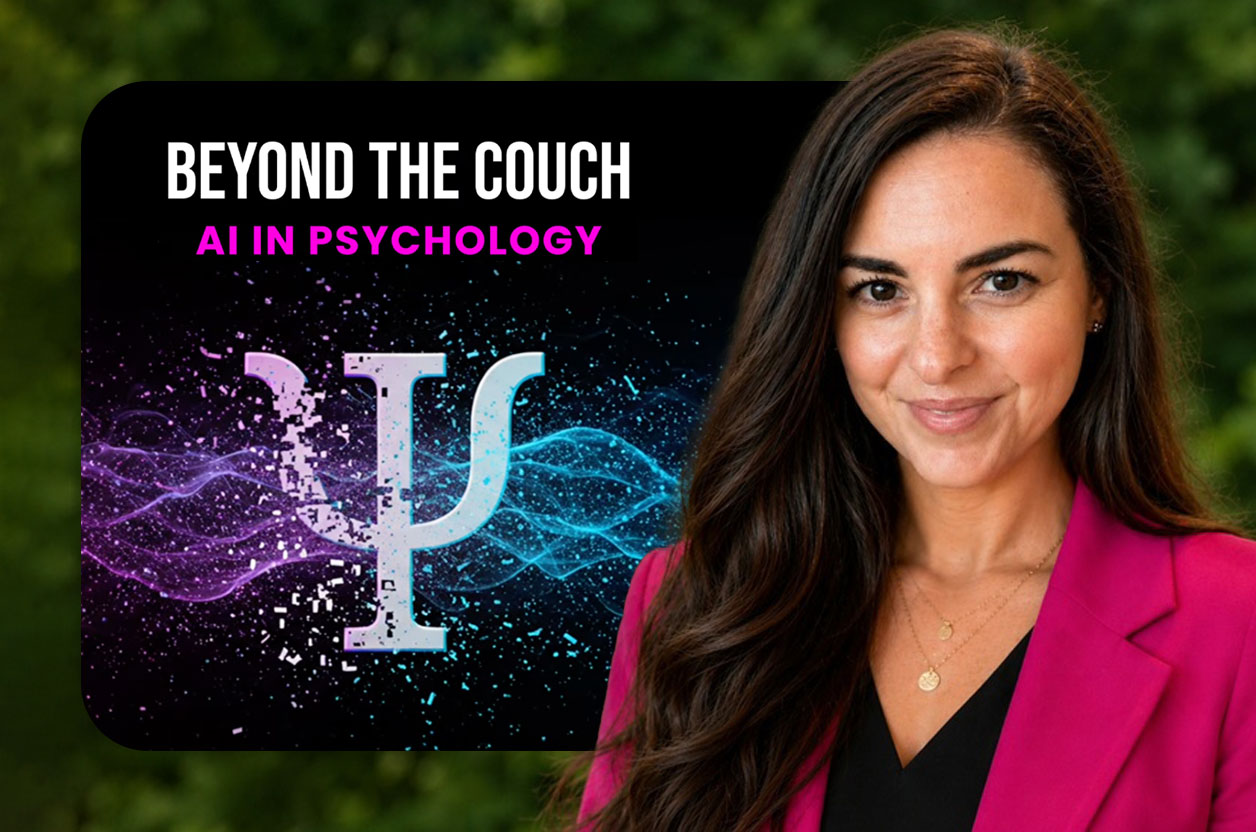
The Future of AI in Mental Health: Safety, Therapy, and Human Judgment
On the Beyond the Couch podcast, ieso's Head of Clinical Strategy, Alyssa Dietz, PhD, gets into where AI earns its place in mental health support and where human clinical judgment stays non-negotiable.

9/2/26
Listen Longer
Two years into his role, ieso CEO Kent Tangen pauses to reflect on lessons learned about leadership, ambition, humility, and building mental health support around what clinicians and patients need.