
10/6/26
ieso Welcomes Arielle Pulverman, PhD as Head of Clinical Product
Meet the health psychologist, founder, and product leader shaping how ieso builds clinically grounded AI for mental health.

Back to Resources
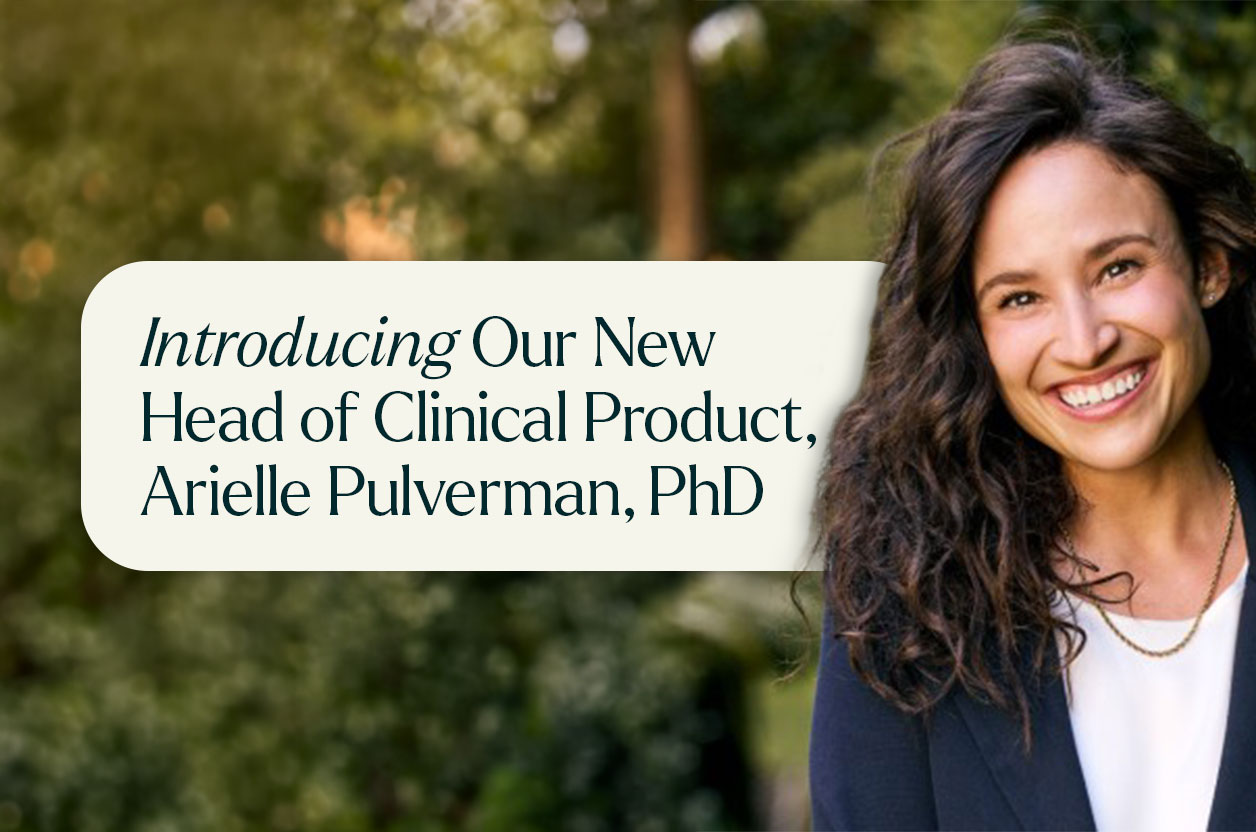

As AI becomes ever more capable in mental health, the biggest product questions center around what we should build, how it fits into clinical workflows, where safeguards and human judgment belong, and how we know whether the technology is helping people.
Those are exactly the kinds of questions Arielle Pulverman, PhD is joining ieso to take on as our new Head of Clinical Product.
A health psychologist, founder, and product leader, Arielle has spent her career at the intersection of clinical science, technology, and care delivery. Before joining ieso, she built a women’s health product serving the perimenopause population. She also co-founded Bruin Health, where she helped bring measurement-based mental health evaluation to more than 30 primary care clinics. She earned her PhD in Health Psychology from UCLA and trained as an NIMH fellow.
We sat down with Arielle to talk about what “clinical product” means to her, where AI belongs in mental healthcare, why great technology fails when it doesn’t fit the workflow, and what it will take to expand access without compromising quality.
Plus, naturally, Bravo.
Much of your career has been spent thinking about some version of the problem ieso is trying to solve: expanding access to mental health support without sacrificing quality. Why ieso, and why now?
Timing, team, and go-to-market are everything, and ieso has all three right now. Decades of delivering care within an outcomes-based payment model have given us an unparalleled dataset of real-world therapy conversations indexed against validated outcome measures. That’s a foundation that’s incredibly hard to replicate, and it’s gold for building clinical AI.
The team has the talent and the conviction not just to try, but to deliver. And our go-to-market is built for scale: our platform, Velora, meets providers inside the tools they already use, and patients inside the interface where they already receive care. My job is to turn that advantage into products that reach more people, faster.
You’ve been a researcher, a founder, and a product leader. How have those experiences sculpted the way you think about building technology for mental health?
Each role added a new lens, and together they shape how I lead. As a health psychologist, I hold mental health products to the same standard as any other area of health: measure and model the mechanisms driving symptoms, and treat those with a whole-person, biopsychosocial approach.
Taking Bruin Health from zero to 30+ clinics taught me that evidence alone isn’t enough. So many brilliant solutions never leave university labs because there’s no way to pay for them. The academic in me used to cringe at the thought of money; now I see it as a vehicle for impact. And leading product taught me to make hard tradeoffs and align teams around what moves the needle for users and the business.
What does “clinical product” mean to you, and where does it fundamentally differ from traditional product development?
If your technology shapes how a clinician delivers care or makes decisions, or how a patient receives care, you’re building a clinical product.
The biggest difference is where clinical sits within that. It can’t be a final stamp of approval at the end of the process. Clinical, product, and engineering have to own the problem together from day one, so what we build fits real workflows and delivers exceptional support to patients. That’s how I build teams. Clinical innovation takes both deep expertise in what’s evidence-based today and the ambition to extend that evidence toward better outcomes. That combination is ieso’s edge.
AI makes it possible to automate things we couldn’t have imagined a few years ago. But “we can” and “we should” aren’t the same thing when it comes to mental health. What's your barometer for where AI belongs, where safeguards belong, and where human judgment needs to step in?
I’m more bullish on clinical AI than many of my colleagues. I believe AI can take on far more of the work of care than we give it credit for, as long as we’re rigorous about proving it.
My barometer is evidence and risk, not novelty. That means evaluating AI against the ways it could fail patients, like minimizing symptoms or missing when someone needs more support. Also, defining up front where it AI responds on its own and where it hands off to a clinician. Human judgment belongs wherever the stakes are highest, and the answer isn’t always clear-cut.
What do product and technology teams tend to underestimate about the distance between a compelling prototype and something patients, clinicians, and healthcare organizations want to use and can trust?
Workflow, workflow, workflow! A prototype can look magical in a demo and still go nowhere if it asks a clinician to open another tab, remember another login, or change how they run a session. Clinicians are already stretched thin, so anything that adds friction won’t get used, no matter how brilliant it is.
The algorithm is often the easy part; the real work is fitting it into how care teams operate day-to-day. And healthcare organizations need more than a great user experience. They need evidence that the product is safe, improves outcomes, and makes the economics of care work. Trust is earned on all three fronts.
What’s one assumption about AI in mental health that we need to ditch?
That therapists and other healthcare providers are anti-AI. People choose careers in healthcare because they want to help people heal. But time and again, I hear how the reality of care delivery leads to disillusionment, burnout, and, sadly, people leaving practice altogether.
Clinical AI that earns their trust and fits how they already work gives them time back for the part of the job they love. Providers aren’t anti-AI. They’re against tools they can’t trust and that make their jobs harder. Our job is to build the opposite.
Important clinical product question: you’re a card-carrying Bravoholic. Which Bravo franchise has your loyalty, and what are you watching after the kids go to bed?
This is likely the most important question you’ve asked me. I’m a die-hard OG RHONY, RHOBH, and RHOC girlie. Fun fact: Alex McCord recently earned her PhD in clinical psychology! They just don’t make ’em like they used to, although I’ve been pretty impressed with RHOSLC, and I hear good things about RHORI (it’s giving old-school RHONJ). I also love Vanderpump Rules… it’s not about the pasta! 🍝

We’re thrilled to have Arielle on the team! Her ability to combine product thinking and a deep understanding of real-world care is critical as we build what’s next in mental health. We can’t wait to see where she takes us.
Connect with Arielle on LinkedIn and say hi. 👋


ABOUT THE AUTHOR


Latest Articles
9/9/26
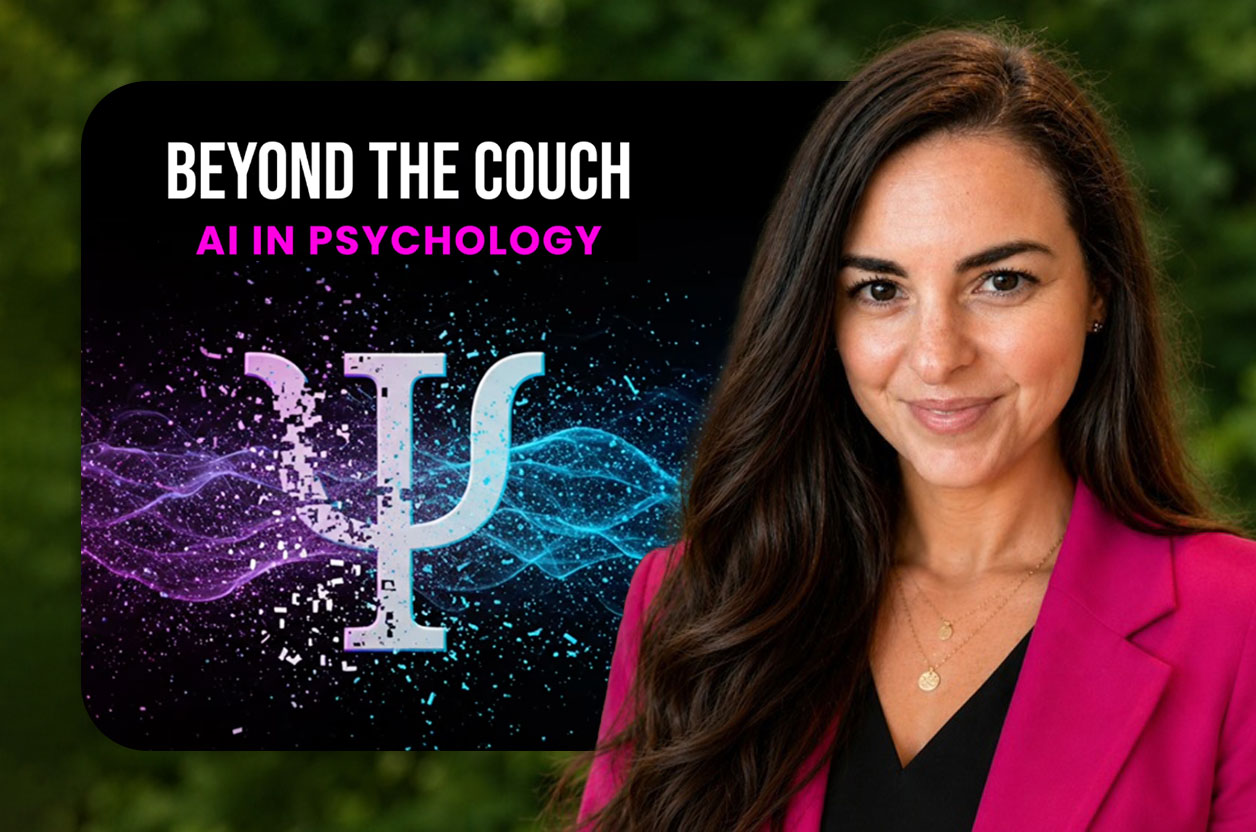
The Future of AI in Mental Health: Safety, Therapy, and Human Judgment
On the Beyond the Couch podcast, ieso's Head of Clinical Strategy, Alyssa Dietz, PhD, gets into where AI earns its place in mental health support and where human clinical judgment stays non-negotiable.
9/2/26
Listen Longer
Two years into his role, ieso CEO Kent Tangen pauses to reflect on lessons learned about leadership, ambition, humility, and building mental health support around what clinicians and patients need.
7/22/26
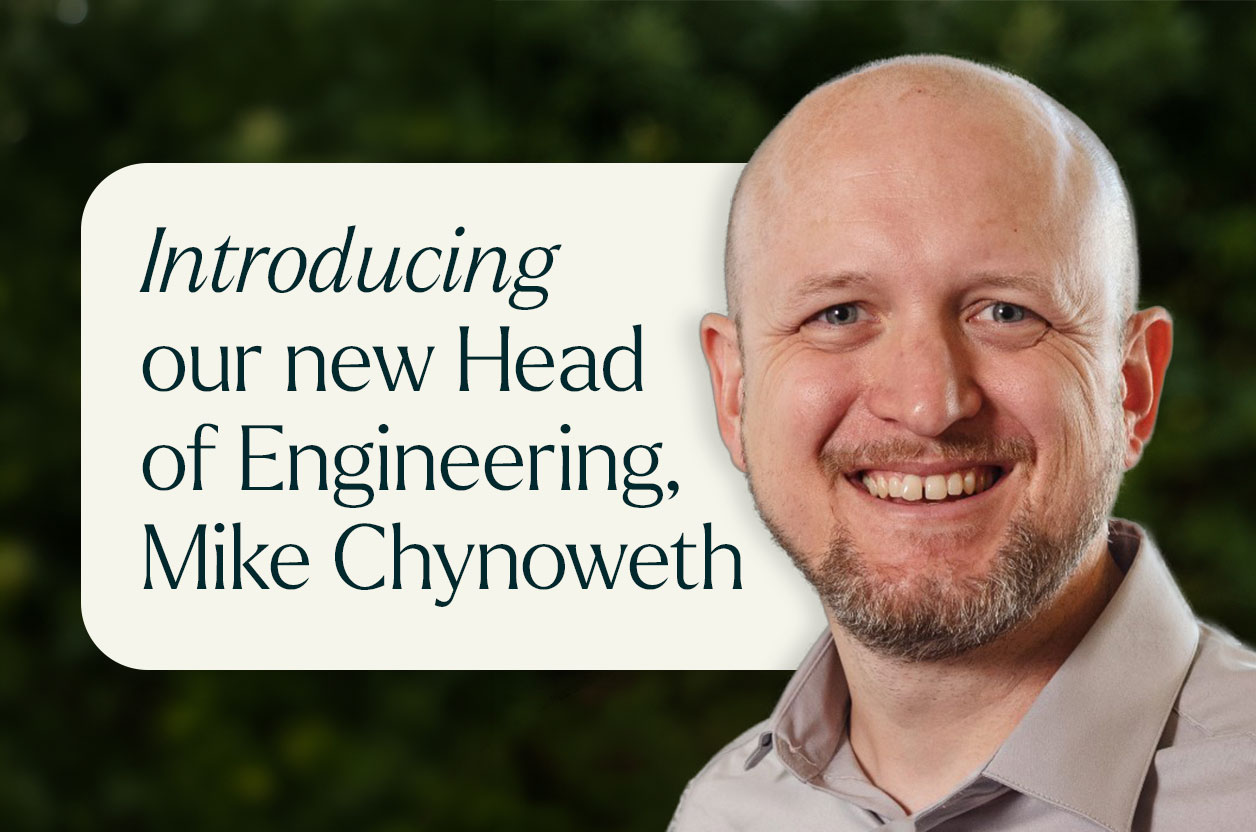
ieso Welcomes Mike Chynoweth as Head of Engineering
An engineering executive who translates strategy into execution and builds teams that deliver quality at speed, Mike Chynoweth brings over 20 years of experience across healthcare, security, and regulated SaaS to ieso as Head of Engineering.

7/8/26
Joy Isn't a Reward for Healing
Dr. Talia Cohen and Alyssa Dietz, PhD, on chronic conditions, identity, lived experience, and the mental health piece most digital health companies are still missing.